
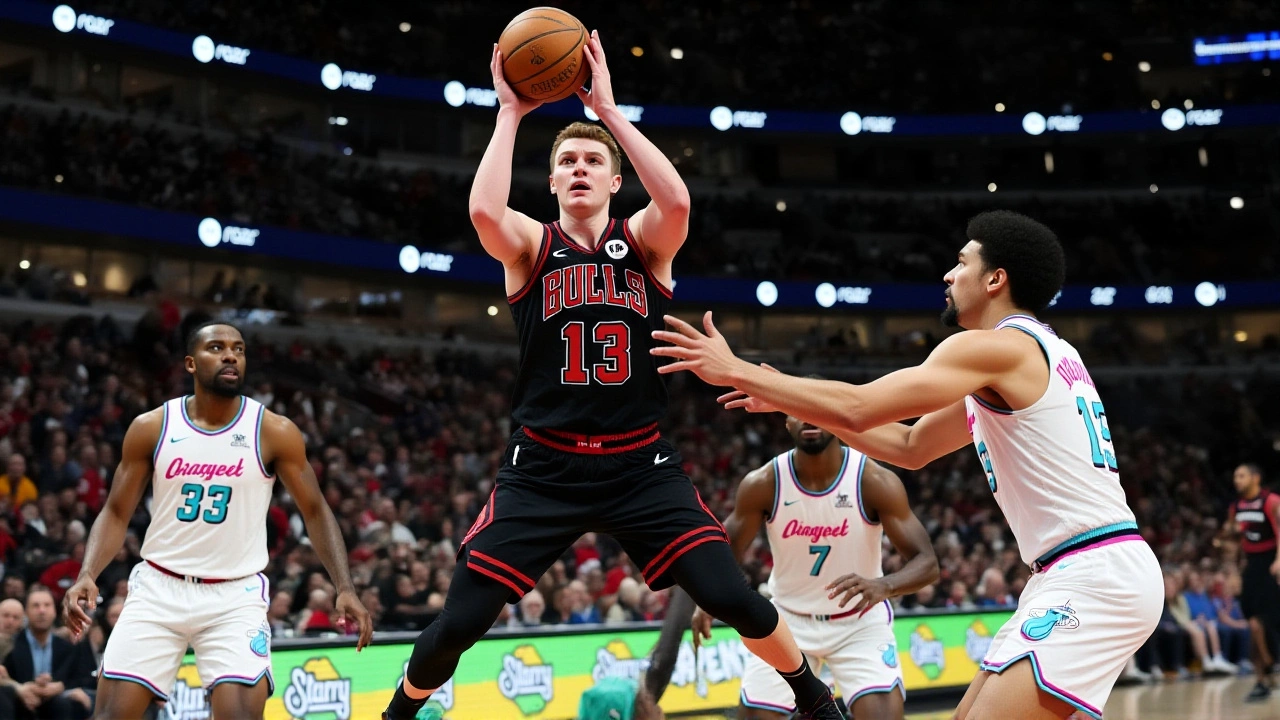
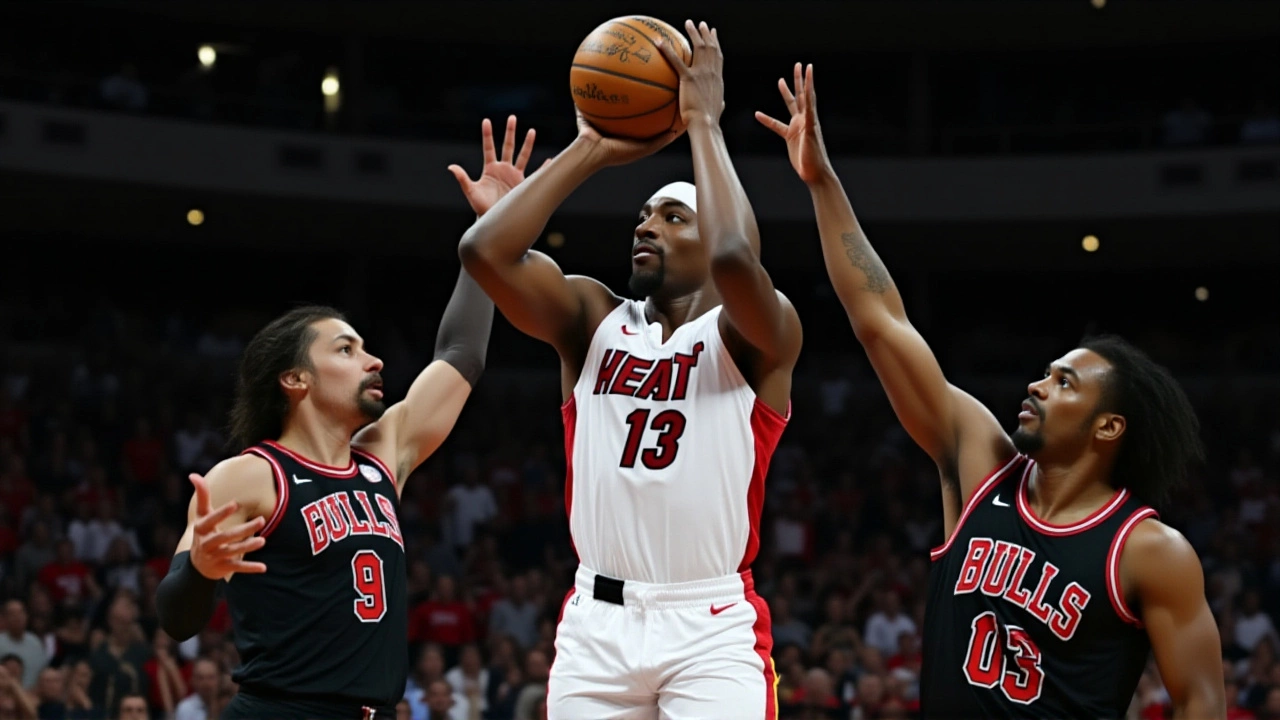
It wasn’t just a win. It was a statement. Tyler Herro turned the United Center into his personal stage, dropping 38 points on 13-of-19 shooting to crush the Chicago Bulls 109-90 on April 16, 2025, and send them home for the third year in a row. The NBA Play-In Tournament - East - 9th Place vs 10th Place wasn’t just another game—it was the end of the road for Chicago, and another chapter in Miami’s unsettling playoff dominance over their longtime rivals. Herro’s performance wasn’t just efficient; it was surgical. Nine free throws made. Three threes. A flurry of drives, step-backs, and pull-ups that left defenders grasping at air. The Miami Heat didn’t just win—they announced they’re still a threat, despite a 37-45 regular season that looked more like a rebuilding year than a playoff push.
How Miami Took Control Early
The game was over by halftime. Not because of a late surge, but because of a first-quarter explosion. The Heat dropped 39 points in the opening 12 minutes—the highest-scoring quarter in Play-In history since the format began in 2019-2020. They shot 61% from the field, hit four threes, and forced Chicago into five turnovers. Josh Giddey, Chicago’s brightest young star, struggled to find rhythm, going 3-of-10 from the field in the first half. Meanwhile, Herro was already at 22 points by the break, and the crowd? Silent. The United Center, usually a cauldron of noise, felt hollow. By the end of the second quarter, Miami led 71-47. That’s a 24-point margin. No team in the Play-In era had ever built such a lead so early against a team with a winning home record.
Chicago’s Struggles Beyond Giddey
The Bulls entered the game with a 39-43 record, hoping home court advantage might tilt things. They’d won 18 of 41 home games—good enough to earn the 10th seed. But their offense sputtered. They shot just 27% from three, missed 27 of 37 attempts. Their bench, expected to carry momentum, managed only 18 points. Coby White, who averaged 18.6 points in the regular season, finished with 9 on 3-of-11 shooting. Mark Williams, their defensive anchor, was neutralized by Miami’s pace and spacing. The Bulls’ only bright spot? Free throws. They went 14-of-17, the best percentage of the night. But when your three-point shooting is worse than a college team’s, and your star is guarded by a 6’3” guard who’s on fire, even perfect charity shots won’t save you.
A Streak That Won’t End
This was the ninth postseason meeting between the Heat and Bulls. Miami now leads 5-4. But the last three? All decided in the Play-In. In 2023, Miami won 102-94. In 2024, it was 105-94. This year? 109-90. Each win was bigger than the last. And each loss for Chicago felt more like a pattern than a fluke. The Bulls have invested in young talent—Giddey, Ayo Dosunmu, Zach LaVine—but they keep running into the same wall: Miami Heat, a team that plays smarter, tougher, and with more playoff DNA than anyone gives them credit for. Even with a losing record, they’ve now won six of their last seven games against Chicago. That’s not luck. That’s coaching. That’s culture.
What This Means for Miami’s Playoff Run
With the win, Miami advances to face the winner of Atlanta versus Orlando on April 17, 2025. They’re now 10-6 in the East’s final standings, tied with Atlanta for the 7th seed, and holding the tiebreaker. If they beat the Hawks or Magic, they’ll face the top-seeded Boston Celtics in Round 1. If they lose? They’re done. But here’s the twist: Miami’s playoff history since 2020 has been defined by resilience. They’ve knocked out higher seeds. They’ve won series with injured stars. They’ve made the Finals twice in five years. Herro, now 25, is no longer a role player—he’s the guy who takes over when it matters. And if he keeps this up, Miami might not just survive the Play-In. They might scare the whole East.
Behind the Scenes: Ownership, Venue, and History
The United Center has been Chicago’s fortress since 1994, seating 20,917. It’s where Michael Jordan won six rings. Now, it’s where Miami keeps breaking hearts. The Bulls are still owned by Jerry Reinsdorf, who’s held the franchise since 1985. Meanwhile, the Heat—led by controlling owner Micky Arison—operate from their sleek downtown Miami headquarters at 601 Biscayne Boulevard. The game was officiated by crew chief Scott Foster, Eric Lewis, and John Goble. No controversial calls. Just pure basketball. And for the Bulls, that’s the cruelest part: no bad refs. Just better opponents.
Why This Matters Beyond the Box Score
The Play-In Tournament was supposed to give more teams a shot. But in the East, it’s become a Miami-Chicago rerun. Three years. Three eliminations. One team keeps rising. The other keeps falling. Chicago’s front office has been criticized for inconsistent roster construction—trading away assets, overpaying for veterans, failing to build around their young core. Miami? They’ve stayed steady. They’ve trusted their system. They’ve developed players like Herro into stars without needing a top-five pick. This isn’t about talent alone. It’s about identity. And right now, the Heat have it. The Bulls? They’re still searching.
Frequently Asked Questions
How did Tyler Herro’s 38-point game compare to his previous Play-In performances?
Herro’s 38 points were his highest in any Play-In game, surpassing his previous high of 29 points in the 2023 matchup against Chicago. He also set a new Heat franchise record for most points in a Play-In game, beating Dwyane Wade’s 34-point effort in 2012. His 13-of-19 shooting and 9-of-10 free throw accuracy were career-best efficiency marks in postseason play.
Why has Miami consistently beaten Chicago in the Play-In Tournament?
Miami’s coaching staff, led by Erik Spoelstra, has consistently exploited Chicago’s defensive weaknesses—particularly their inability to guard pick-and-roll actions and close out on shooters. The Heat also play with more physicality and discipline in high-pressure games. Chicago, by contrast, has struggled with shot selection and turnovers in clutch moments, often relying too heavily on individual playmaking instead of team execution.
What’s at stake for Miami in their next game against Atlanta or Orlando?
If Miami beats the winner of the Hawks-Magic game, they’ll face the top-seeded Boston Celtics in the first round of the playoffs. A win there would make Miami the first 10th seed in NBA history to reach the Eastern Conference Finals. Even a loss in the next game still means they’ve outperformed expectations—proving they’re a legitimate threat despite their 37-45 regular season record.
Is this the end of the Bulls’ rebuild?
Not necessarily, but it’s a major setback. With Giddey, Dosunmu, and LaVine all under 28, the core is young. But the repeated playoff failures—especially in winnable matchups like this—raise questions about leadership and culture. If Chicago doesn’t make the playoffs next season, major front-office changes could be coming. The 2025 Play-In loss may be the catalyst for a full roster overhaul.
How significant is the Heat’s 39-point first quarter in NBA history?
It’s the highest-scoring first quarter in any NBA Play-In game since the format began in 2019-2020. Only six teams in NBA history have scored 40+ in a quarter during the playoffs, and Miami came within one point of that elite group. Their 39-point opening frame also ranks as the second-highest first quarter by any team in a road playoff game since 2000, trailing only the 2020 Lakers’ 40-point opening period in Orlando.
What does this mean for Miami’s future free agency prospects?
Herro’s breakout performance could make him a prime target for max contract extensions this summer. With his contract set to expire in 2026, Miami may move quickly to lock him in before he hits free agency. A deep playoff run could also attract veteran free agents who want to join a rising contender—especially if the Heat can prove they’re more than just a Play-In team.





Written by Kieran Blackthorne
Hello, I'm Kieran Blackthorne, a gaming enthusiast and expert. I have an extensive knowledge of various games, ranging from popular mainstream titles to hidden indie gems. As a passionate writer, I enjoy sharing my insights, reviews, and in-depth analysis of the gaming world through articles and blogs. I'm always on the lookout for the next big thing, whether it's a groundbreaking game or an innovative piece of gaming technology. My ultimate goal is to help fellow gamers discover and appreciate the incredible experiences that the gaming world has to offer.
All posts: Kieran Blackthorne