
When you hear the name Lycoris, you might picture a glamorous escort girl apris from a modern travel blog - but that’s not who she was. Lycoris was a Roman mime performer in the first century BCE, known for her sharp wit, daring stage presence, and the scandalous rumors that clung to her like perfume. She wasn’t a prostitute. She wasn’t even called a whore in her time. Yet centuries later, people still mix up ancient performers with modern stereotypes, turning art into vice and history into gossip. The truth? Lycoris was one of the most celebrated entertainers in Rome, and her legacy has been twisted by moral panic, not facts.
It’s easy to confuse ancient female performers with modern sex work, especially when you see phrases like paria escor pop up in search results. But Rome didn’t have the same categories we do. A mime like Lycoris wasn’t an escort gilr paris - she was an artist. Mimes performed scripted sketches, improvisations, and satirical plays. They danced, mimed emotions, and sometimes wore masks to portray gods, slaves, or kings. Their bodies were their instruments. Their voices, their timing. Their fame, their currency. And yes, some of them were rumored to sleep with patrons. But so were poets, senators, and gladiators. That didn’t make them whores - it made them human.
Who Was Lycoris, Really?
Lycoris was the stage name of a woman named Cytheris, a freed slave who rose from the margins of Roman society to become a favorite of powerful men. She performed in the open-air theaters of Rome, where crowds of merchants, soldiers, and senators packed the benches. Her act wasn’t just physical - it was political. She mocked the elite, mimicked their speeches, and turned their hypocrisy into laughter. That made her dangerous. It also made her unforgettable.
She was close to Mark Antony, one of Rome’s most powerful generals. Cicero, the famous orator, wrote about her in his letters - not as a mistress, but as a performer he found irritatingly clever. He called her "a woman who speaks too well," and that was his real complaint. She didn’t need to sleep with him to have influence. She had the stage, and that was enough.
The Myth of the "Historic Whore"
Why do we keep calling women like Lycoris whores? It’s not because the Romans did. The Latin word "meretrix" meant prostitute - and it was used for women who sold sex for money, often in brothels. Mimes were classified as "scenicae," performers. They had contracts, salaries, and public recognition. Some even owned property. A few became wealthy enough to sponsor festivals.
But after the fall of Rome, Christian writers rewrote history. They painted all female performers as sinners. They lumped dancers, singers, and mimes into one dirty category. By the Middle Ages, Lycoris was no longer a comic genius - she was a cautionary tale. And today, that myth still lives in the way we talk about women who perform for crowds. We still assume sex is part of the job. We still call them names.
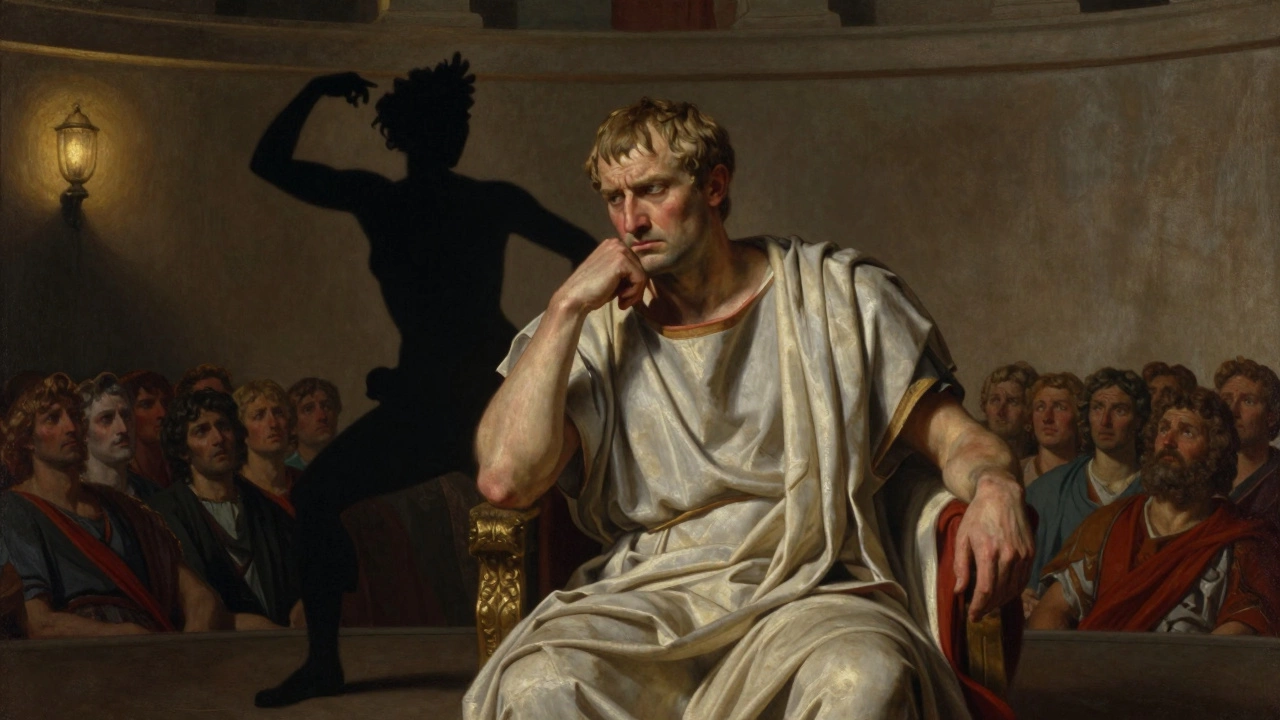
How Modern Myths Distort the Past
Look at how search engines respond when you type "Roman female performers" or "ancient actresses." You’ll get articles that say things like "These women were essentially early escorts." That’s not history. That’s projection. We project our modern anxieties about sex work onto the past. We see a woman on stage, we think of a woman in a car, and we assume the two are the same.
But Lycoris didn’t work in the back alleys of Rome. She worked under the open sky, in front of thousands. She was paid by the state for public performances. Her name appeared on theater posters. She had fans. She had rivals. She had a reputation for being brilliant - not for being available.
Even today, when someone writes about "historic whores," they’re not talking about Lycoris. They’re talking about the ghost of her image - a ghost we created. And that ghost is the one that keeps popping up in blogs, in clickbait, in poorly researched TikTok videos. It’s the ghost that sells ads for services like escort girl apris, not the truth of who she was.
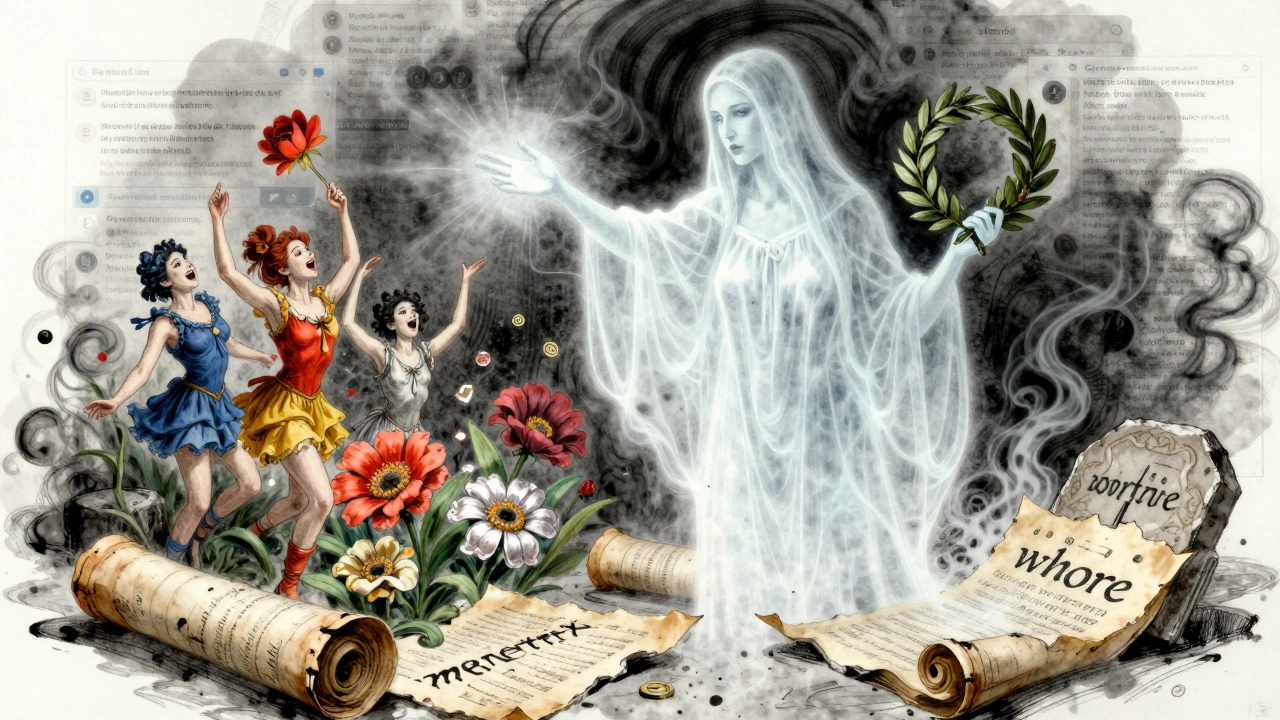
The Real Legacy of Roman Mimes
Lycoris didn’t just perform. She changed how people saw women in public life. Before her, women weren’t allowed on Roman stages. After her, they were. She broke rules not by seducing men, but by outsmarting them. She made them laugh at their own arrogance. That’s power.
Modern theater owes her. Stand-up comedy owes her. Even improv troupes owe her. She was the first woman to use performance as a weapon - and she won. Her name didn’t survive because she slept with powerful men. It survived because she made them feel foolish.
Why This Matters Today
When we call ancient performers whores, we erase their skill. We reduce their art to sex. And we make it harder for women in performance today to be taken seriously. A dancer, a comic, a drag artist - they’re still fighting the same myth: that if you perform for attention, you must be selling something else.
Lycoris didn’t need to be a prostitute to be dangerous. She didn’t need to be a victim to be powerful. She just needed to be seen. And she was. Thousands of Romans saw her. They remembered her. They wrote about her. And now, 2,000 years later, we’re still talking about her - even if we’re getting her name wrong.
So the next time you see a headline like "Historic Whores with Old Pros," pause. Ask: Who’s really being erased here? Is it the woman who danced on stage? Or the one we turned into a fantasy to make ourselves feel better about our own biases?
There’s no record of Lycoris ever taking money for sex. There’s plenty of record of her taking applause. That’s the difference between myth and history.




Written by Kieran Blackthorne
Hello, I'm Kieran Blackthorne, a gaming enthusiast and expert. I have an extensive knowledge of various games, ranging from popular mainstream titles to hidden indie gems. As a passionate writer, I enjoy sharing my insights, reviews, and in-depth analysis of the gaming world through articles and blogs. I'm always on the lookout for the next big thing, whether it's a groundbreaking game or an innovative piece of gaming technology. My ultimate goal is to help fellow gamers discover and appreciate the incredible experiences that the gaming world has to offer.
All posts: Kieran Blackthorne